However, when comparing our solar system to others, it's considered somewhat unique and atypical for a few reasons:
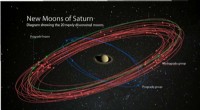
* Planetary arrangement: Most of the planets in our system have relatively circular orbits and lie on roughly the same plane. This is not always the case in other systems, which can have highly elliptical orbits and planets on very different orbital planes.
* Giant planets' location: Our gas giants (Jupiter, Saturn, Uranus, and Neptune) are located further out from the Sun. Many other systems have gas giants much closer to their stars, potentially even within the "habitable zone".
* Asteroid Belt: The asteroid belt between Mars and Jupiter is a unique feature in our solar system, and its formation and presence are still debated.
* Existence of Earth: The presence of a habitable planet like Earth with liquid water and a stable atmosphere is a rare occurrence, even within our own galaxy.
While our solar system is unique in some ways, it's important to remember that it's just one example of a planetary system. As we discover more and more exoplanets, we're constantly learning about the variety and complexity of planetary systems out there. It's likely that our solar system is not the only one with unique features.