1. Time Dilation, Not Time Stoppage:
* Special Relativity: Einstein's theory of Special Relativity says that time is relative. This means that time passes at different rates for observers who are moving relative to each other.
* Time Dilation: The faster an object moves, the slower time passes for it *relative* to a stationary observer. As an object approaches the speed of light, time slows down significantly *from the perspective of a stationary observer*. However, from the object's perspective, time continues to pass normally.
* It's never truly zero: Even at the speed of light, time doesn't completely stop for a photon (a particle of light). From the photon's perspective, the journey is instantaneous.
2. Distance and Time:
* Light speed is finite: The speed of light is incredibly fast, approximately 299,792,458 meters per second. However, it's not infinite.
* Earth-Sun distance: The average distance between the Earth and the Sun is about 149.6 million kilometers (93 million miles).
* Time = Distance / Speed: To calculate the time it takes for light to travel from the Sun to Earth, we use the formula:
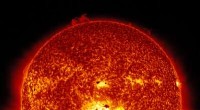
* Time = 149.6 million kilometers / 299,792,458 meters per second = approximately 500 seconds, which is about 8 minutes and 20 seconds.
In conclusion:
* Time doesn't stop at the speed of light; it slows down significantly relative to a stationary observer.
* Light travels at a finite speed, which is why it takes time for sunlight to reach Earth.
* From a photon's perspective, the journey is instantaneous due to time dilation.