1. Rocketry and Propulsion:
* Powerful engines: Early rockets were simple, but advancements in materials, fuel, and engine design have allowed us to build incredibly powerful rockets capable of launching payloads into orbit and beyond.
* Reusable rockets: Reusable rockets like SpaceX's Falcon 9 and Starship significantly reduce the cost of space travel, making exploration more frequent and affordable.
* Ion propulsion: This type of engine uses electricity to accelerate ions, providing a gentler and more fuel-efficient way to travel long distances in space.
2. Spacecraft Design and Engineering:
* Lightweight materials: Advanced materials like composites and alloys allow spacecraft to be lighter, reducing fuel requirements and increasing payload capacity.
* Autonomous navigation: Spacecraft now have sophisticated sensors and onboard computers for autonomous navigation, allowing them to travel to distant planets without constant human intervention.
* Advanced communication: Improved communication systems like deep-space networks allow for faster and more reliable data transfer between Earth and spacecraft.
3. Telescopes and Observation:
* Space telescopes: Telescopes like Hubble and James Webb Space Telescope are positioned in space, providing an unobstructed view of the cosmos, allowing us to observe distant galaxies and planets with unprecedented clarity.
* Imaging technology: Advanced imaging techniques like adaptive optics and interferometry have significantly enhanced the resolution and detail of images from space.
* Spectroscopy: Instruments like spectrometers allow us to analyze the light emitted from celestial bodies, revealing their composition and temperature.
4. Robots and Rovers:
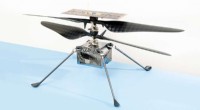
* Robotic exploration: Robots like the Mars rovers Curiosity and Perseverance can collect samples, perform experiments, and transmit valuable data back to Earth.
* Remote-controlled vehicles: Drones and rovers can explore dangerous or difficult terrains, expanding our knowledge of planets and moons.
* Artificial intelligence: AI is being used to analyze data, control spacecraft, and even assist in scientific research.
5. Life Support and Life Sciences:
* Closed-loop life support systems: These systems recycle air and water, enabling longer-duration space missions and potential future space colonies.
* Bioregenerative life support: Research is ongoing to develop systems that use plants to generate oxygen and food, making long-duration space travel more sustainable.
* Microgravity research: Studying the effects of microgravity on humans and other lifeforms is vital for future space exploration and potential colonization.
Overall, technology has revolutionized space exploration, allowing us to:
* Reach farther into the cosmos: Explore the outer solar system and beyond.
* Observe with greater clarity: Gain deeper understanding of the universe.
* Study planets and moons up close: Search for signs of life and understand their formation.
* Prepare for future space missions: Develop the technologies needed for human exploration and settlement beyond Earth.
Technology will continue to play a vital role in pushing the boundaries of space exploration and driving human curiosity about the universe.