1. Equipment:
* Telescope: A telescope with a minimum aperture of 60mm (2.4 inches) is recommended for seeing Jupiter's moons. Larger apertures (80mm, 100mm, etc.) will offer more clarity and detail.
* Tripod: A sturdy tripod is essential for stability, especially at higher magnifications.
* Finder Scope: A finder scope helps you locate Jupiter in the sky.
* Eyepieces: Experiment with different eyepieces to find the magnification that works best for you. Higher magnifications will make the moons appear larger, but will also reduce the field of view.
2. Location and Timing:
* Dark Location: Observe from a location with minimal light pollution for the best contrast.
* Clear Skies: Obviously, you'll need clear skies.
* Jupiter's Position: Use a star chart or a planetarium app to find out when Jupiter is high in the sky for your location. This ensures the best viewing conditions.
3. Observing Process:
1. Locate Jupiter: Use your finder scope and a star chart or planetarium app to locate Jupiter in the night sky.
2. Point Your Telescope: Center Jupiter in your telescope's field of view.
3. Adjust Magnification: Start with a low-power eyepiece and gradually increase magnification until you can clearly see the moons.
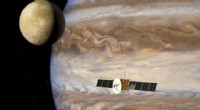
4. Identify the Moons: You should be able to see at least 4 bright points of light surrounding Jupiter, which are the Galilean moons: Io, Europa, Ganymede, and Callisto.
5. Observe Their Motion: Over time, you'll notice the moons shifting positions relative to Jupiter. This is due to their orbital motion around the giant planet.
Tips:
* Focus: Be sure to carefully focus your telescope to get the sharpest view of Jupiter and its moons.
* Patience: It may take some time to find Jupiter's moons, especially if they are close to the planet. Be patient and keep observing.
* Record Observations: Draw or take notes about the position of the moons, their brightness, and any other details you see. This can help you track their movement over time.
* Use Apps: There are numerous free apps like Stellarium, SkySafari, and Star Walk that can help you identify Jupiter and its moons, predict their positions, and even simulate their movement.
Enjoy Your Observations:
Watching Jupiter's moons dance around the giant planet is an amazing experience. It's a reminder of the vastness of our solar system and the constant motion of celestial bodies. Happy stargazing!