Here's a breakdown:
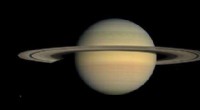
* Gravitational Pull: Jupiter and Saturn, being the largest planets, exert a significant gravitational pull on Mars. This pull isn't constant, as the planets move in their orbits.
* Uneven Distribution of Mass: Mars, like Earth, isn't perfectly spherical. Its mass is unevenly distributed, with a slight bulge at the equator. This uneven distribution creates a slight "wobble" in its rotation.
* Combined Effect: The combined effect of Jupiter and Saturn's gravitational pull and Mars' uneven mass distribution causes the planet's axis to slowly wobble over time.
Consequences of Axial Precession:
* Climate Change: This wobble affects the amount of sunlight reaching different parts of Mars, leading to long-term climate changes over thousands of years.
* Ice Ages: Scientists believe axial precession could be responsible for the formation and retreat of polar ice caps on Mars.
* Orbital Variations: Precession also influences Mars' orbital path, causing it to vary slightly over long periods.
Comparing Earth and Mars:
* Earth's Wobble: Earth also experiences axial precession, but it takes about 26,000 years to complete one cycle. This wobble is responsible for the gradual shifting of the equinoxes.
* Mars' Wobble: Mars' precession cycle is longer than Earth's, taking approximately 170,000 years to complete. This slower wobble results in longer-term climate changes on Mars.
Understanding Axial Precession:
Imagine a spinning top. The top wobbles as it spins because its axis of rotation isn't perfectly aligned with the force of gravity. Mars, with its uneven distribution of mass and the gravitational pull of other planets, experiences a similar wobble, albeit on a much larger scale.