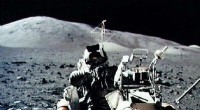
* Exposure time: The cameras used during the Apollo missions were designed to capture the lunar surface, which reflects sunlight. This meant that the exposure time was adjusted for bright lighting conditions, making it difficult to capture the faint light from distant stars.
* Sunlight: The lunar surface is incredibly bright under direct sunlight, overwhelming the faint light of the stars.
* Lens limitations: The cameras used on the missions had limited sensitivity, meaning they weren't ideal for capturing the faint light from distant stars.
* Film processing: The film used in the Apollo missions was processed in a way that emphasized the details of the lunar surface, leading to the stars being obscured.
While the stars might not be as prominent as we might expect, they are often visible in the background of many Apollo photos. There are even some images where the stars are quite clear, particularly when the astronauts are in the shadow of the lunar module or other objects.
It's important to remember that these images are a snapshot of a specific moment in time, and the lighting conditions, exposure settings, and camera limitations all play a role in what we see.
To see examples of stars in Apollo moon landing photos, you can do a quick search online for "stars in Apollo photos" or "Apollo 11 stars".