Here's how it works:
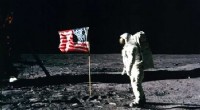
1. Powerful Laser Beams: Powerful lasers on Earth are pointed at retroreflectors placed on the Moon's surface by Apollo missions and robotic spacecraft.
2. Reflection: These retroreflectors are designed to reflect the laser light directly back to its source.
3. Time Measurement: The time it takes for the laser light to travel to the Moon and back is carefully measured.
4. Distance Calculation: Knowing the speed of light, scientists can calculate the distance to the Moon with incredible accuracy – down to a few centimeters.
Here's why LLR is so important:
* Precise Distance Measurement: LLR provides the most accurate measurement of the distance between Earth and the Moon, which is crucial for understanding lunar motion and gravity.
* Testing Relativity: LLR data helps to test Einstein's theory of general relativity by measuring the effect of gravity on the propagation of light.
* Monitoring Lunar Motion: LLR allows us to monitor the Moon's orbit, its rotation, and its internal structure.
* Understanding the Earth-Moon System: LLR helps us understand the dynamics and evolution of the Earth-Moon system.
While the laser beams used in LLR are powerful, they are not visible to the naked eye. They are also not focused enough to be considered "lasers" in the traditional sense. However, the technology demonstrates the remarkable ability of laser light to travel vast distances and be reflected back to Earth.