Here's how it works:
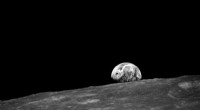
* Moon's Gravity: The Moon's gravitational pull is strongest on the side of the Earth facing it. This pull stretches the Earth slightly, creating a bulge of water on the side facing the Moon.
* Sun's Gravity: The Sun also has a gravitational pull on Earth, but it's weaker than the Moon's because it's much farther away. However, the Sun's gravity still contributes to the tides.
* Combined Effect: When the Sun and Moon are aligned (during a new moon or full moon), their gravitational forces combine to create higher high tides and lower low tides, known as spring tides.
* Opposite Effect: When the Sun and Moon are at right angles to each other (during a first or third quarter moon), their gravitational forces partially cancel each other out, resulting in lower high tides and higher low tides, known as neap tides.
So, it's the gravitational pull of both the Moon and the Sun, along with the Earth's rotation, that create the rhythmic rise and fall of tides we see on our planet.