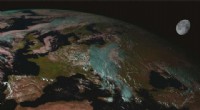
* The Moon doesn't produce its own light. It reflects sunlight.
* The Moon orbits Earth. This orbit takes approximately 27.3 days.
* The Moon is always half lit by the Sun. The half facing the Sun is bright, the other half is dark.
* Our perspective changes. As the Moon orbits Earth, we see different amounts of the sunlit half.
Here's a visual analogy: Imagine holding a basketball and shining a flashlight on it. You'll see different portions of the lit side depending on your angle.
The Phases:
1. New Moon: The Moon is between the Earth and the Sun. We see the dark side, so it appears invisible.
2. Waxing Crescent: A sliver of the Moon becomes visible, growing larger each night.
3. First Quarter: Half of the Moon is illuminated, looking like a half-circle.
4. Waxing Gibbous: More than half of the Moon is illuminated, growing larger each night.
5. Full Moon: The entire sunlit side of the Moon faces Earth, making it appear fully illuminated.
6. Waning Gibbous: The illuminated portion starts shrinking, becoming smaller each night.
7. Last Quarter: Half of the Moon is illuminated again, but the opposite side is lit compared to the First Quarter.
8. Waning Crescent: The illuminated portion continues shrinking until only a sliver remains.
Important Note: The cycle repeats every 29.5 days, which is why we have a lunar month.