Here's how it works:
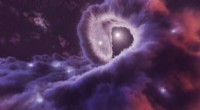
* Gravity: Gravity pulls all the matter in a protostar (a star-in-formation) towards its center. The more massive the protostar, the stronger its gravitational pull.
* Pressure: As the protostar contracts under gravity, the core heats up. This heat causes the atoms within the core to move faster and collide more frequently. This increased motion generates pressure that pushes outwards, resisting the force of gravity.
For a star to form, the internal pressure must be strong enough to counteract gravity. Here's why a minimum mass is required:
* Nuclear Fusion: For a star to sustain itself and shine, it needs to initiate nuclear fusion in its core. This is the process where lighter elements (like hydrogen) fuse to form heavier elements (like helium), releasing tremendous energy. For fusion to occur, the core needs to reach a certain temperature and pressure.
* Minimum Mass for Fusion: Stars with masses below a certain threshold (around 0.08 times the mass of our Sun) simply don't have enough gravity to compress their core to the necessary temperature and pressure to initiate fusion. Without fusion, they can't sustain themselves as stars. These objects are known as brown dwarfs. They are often called "failed stars" because they lack the internal energy source to shine like true stars.
In essence, the lower limit on the mass of a star represents the point at which gravity is strong enough to trigger the nuclear fusion that makes a star shine.