Comets:
1. Composition:
* Comets are icy bodies composed primarily of ice (water, carbon dioxide, methane, ammonia), dust, and rock.
* Spectroscopic analysis reveals the presence of these components in the coma and tail.
2. Orbits:
* Comets have highly elliptical orbits that take them far from the Sun and then bring them close.
* Their orbits are often perturbed by the gravitational influence of planets.
* These orbits can be calculated accurately, allowing for future appearances to be predicted.
3. Coma and Tail:
* As a comet approaches the Sun, the ice vaporizes, creating a bright cloud of gas and dust called a coma.
* The solar wind pushes this material away from the Sun, forming a long tail.
* Two tails are often observed: a dust tail and a gas (ion) tail.
4. Meteor Showers:
* Some comets leave trails of debris along their orbits.
* When Earth passes through these trails, we experience meteor showers.
5. Evidence from Spacecraft Missions:
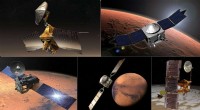
* Missions like Rosetta and Stardust have provided close-up observations of comets.
* Rosetta even landed a probe on comet 67P/Churyumov-Gerasimenko, providing detailed analysis of its surface and composition.
Asteroids:
1. Composition:
* Asteroids are rocky or metallic bodies, much smaller than planets.
* Their composition varies widely, ranging from primitive carbonaceous chondrites to iron-nickel meteorites.
* Spectroscopic analysis and meteorite studies help determine their composition.
2. Asteroid Belt:
* Most asteroids reside in the asteroid belt between Mars and Jupiter.
* The belt is thought to be remnants of the early solar system that never formed into a planet.
* Gravity of Jupiter prevented the formation of a planet in this region.
3. Orbits:
* Asteroids orbit the Sun in a relatively flat plane, similar to planets.
* Their orbits can be elliptical, but are generally more circular than cometary orbits.
* Some asteroids have orbits that cross Earth's path, posing potential impact risks.
4. Evidence from Missions:
* Spacecraft like Dawn and Hayabusa have visited asteroids, capturing images and collecting samples.
* These missions provide valuable data on their size, shape, composition, and geological history.
5. Meteorites:
* Meteorites are fragments of asteroids that have fallen to Earth.
* Their study provides vital information about the composition, age, and origin of asteroids.
6. Impact Craters:
* Impact craters on Earth and other celestial bodies are evidence of asteroid impacts.
* These craters provide insights into the history of asteroid impacts on our solar system.
Both Comets and Asteroids:
* Formation: Both comets and asteroids formed early in the solar system's history.
* Role in Evolution: They likely played significant roles in delivering water and organic molecules to Earth, contributing to the development of life.
* Impact Risk: Both can pose potential threats to Earth, as evidenced by past impacts.
These are just some of the key scientific facts and evidence regarding comets and asteroids. Continued research and exploration will undoubtedly reveal even more about these fascinating objects.