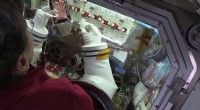
* Sight: Scientists use sight to observe phenomena, examine samples under microscopes, read data from instruments, and analyze images.
* Hearing: While less common, scientists can use hearing to listen for sounds in experiments, such as the bubbling of a solution or the clicks of a Geiger counter.
* Touch: Scientists use touch to carefully handle objects, feel textures, and assess the temperature of materials.
* Smell: Smell is used in a limited way in science, mainly in chemistry, where it helps identify certain chemicals or substances.
* Taste: Taste is rarely used in science due to safety concerns, but in some specific fields like food science or toxicology, it might be used cautiously and with appropriate safety measures.
Important Note: While scientists use their senses, they rely heavily on scientific tools and instruments to collect more precise and objective data. For example, instead of just looking at a sample, they might use a microscope to see its details. Instead of just feeling the temperature of a solution, they might use a thermometer.
So, while scientists use their senses as a starting point, they rely on instruments and methodologies to collect data in a controlled and accurate way.