1. They are mostly empty space: Comets are essentially dirty snowballs made of ice, dust, and rock. Despite their impressive appearances, they are mostly empty space. This low density makes them very light and allows them to resist the stresses of gravitational pulls and friction.
2. They are small: Their small size (typically a few miles across) means their gravitational forces are weak, preventing them from being pulled apart by their own mass.
3. They are incredibly cold: The extreme cold of space keeps the ices in the comet frozen, holding the structure together.
4. They spend most of their time far from the Sun: When comets are far out in the solar system, they are mostly undisturbed. Their journey through the solar system is a cycle of long periods of peace punctuated by brief, intense encounters with the Sun.
5. The coma acts as a buffer: When a comet gets close to the Sun, its ice starts to sublimate (turn directly into gas), creating a protective coma around the nucleus. This coma, a large cloud of gas and dust, actually acts as a shield, absorbing some of the Sun's heat and radiation, and mitigating the impact of solar wind.
Maintaining Their Path:
* Gravity is the key: Comets follow elliptical paths around the Sun, guided by the Sun's gravitational pull. This pull is strongest when the comet is closest to the Sun and weakest when it's furthest away.
* Conservation of momentum: Comets are constantly moving, and their momentum helps them maintain their trajectory. This momentum is a measure of their mass and velocity, and it's conserved in the absence of external forces.
* Small perturbations: While gravity is the main force, comets also experience small gravitational pulls from other planets in the solar system. These can slightly alter their orbits over time, but usually don't drastically change their paths.
Disintegration:
While comets are remarkably resilient, they are not invincible. They can disintegrate due to a few factors:
* Repeated passes near the Sun: Each time a comet swings close to the Sun, it loses more of its ice and dust. This can weaken the comet's structure, making it more susceptible to fragmentation.
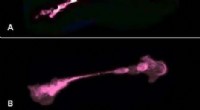
* Collisions: Collisions with other space objects can break apart comets, as seen in the case of Comet Shoemaker-Levy 9 that broke up into fragments before colliding with Jupiter.
* Tidal forces: The gravitational forces of massive objects like planets can pull on a comet and break it apart, especially if the comet gets too close.
So, while comets are fragile objects, they are also remarkably resilient. Their unique structure and trajectory allow them to survive their travels through the solar system, even though they are constantly being bombarded with radiation and heat.