Ancient Times:
* Ancient Greeks: Philosophers like Anaxagoras (5th century BC) proposed the moon reflected sunlight, but this was largely philosophical and lacked empirical proof.
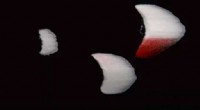
* Lunar Eclipses: Early civilizations observed lunar eclipses, noticing the Earth's shadow falling on the moon, hinting at its reflective nature.
Early Modern Period:
* Leonardo da Vinci (15th century): He observed that the moon's phases were consistent with sunlight reflecting off a sphere, but lacked the tools to prove it definitively.
* Galileo Galilei (early 17th century): With his telescope, he observed craters on the moon's surface, suggesting a solid body. This, combined with his observation of sunspots, further strengthened the idea of the moon reflecting sunlight.
18th Century and Beyond:
* Newton's Law of Universal Gravitation (1687): This provided a theoretical framework for understanding the Moon's orbit around Earth, further solidifying the idea of sunlight being the source of its light.
* Spectroscopy: In the 19th century, spectroscopy allowed scientists to analyze the composition of light from the moon and confirm it was identical to sunlight.
Conclusion:
While the idea of the moon reflecting sunlight was theorized by ancient Greeks, it wasn't definitively confirmed until the development of telescopes, Newton's theory of gravity, and spectroscopy in the 17th-19th centuries. It was a gradual process, building upon observations and advancements in scientific understanding.