What is a Scientific Model?
A scientific model is a simplified representation of a real-world phenomenon. It can be a physical model (like a globe representing Earth), a mathematical model (like equations describing planetary motion), or a conceptual model (like the theory of evolution).
How Do Models Explain Observations?
* Predictions: Models make predictions about how the system being modeled should behave under different conditions.
* Testing: These predictions are then tested against real-world observations.
* Confirmation or Revision: If the predictions match the observations, the model is supported. If they don't, the model needs to be revised or replaced.
Examples:
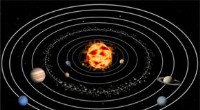
* Newton's Law of Gravity: This mathematical model explains observations like why objects fall to the ground and how planets orbit the sun.
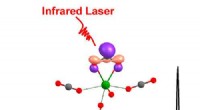
* The Bohr Model of the Atom: This conceptual model explains how electrons behave within an atom and why elements emit specific wavelengths of light.
Important Points:
* Limitations: Models are simplifications and don't perfectly represent reality. They might not account for all factors or have limitations in their range of applicability.
* Evolution: Scientific models are constantly being refined and improved based on new observations and data.
In Summary:
Scientific models are crucial tools for understanding the world around us. They explain observations by providing a framework for making predictions that can be tested against reality. The success of a model is determined by its ability to accurately predict and explain observed phenomena.