1. Close Encounters with Massive Objects:
* Star Passby: A star passing close to our solar system could exert enough gravitational pull to disrupt planetary orbits. This is a rare event, but it has been theorized as a possible explanation for the existence of rogue planets.
* Giant Impact: A collision with a massive object, like another planet or a very large asteroid, could dramatically alter a planet's orbit. This is believed to be what happened to form the Earth-Moon system.
2. Gravitational Perturbations:
* Stellar Evolution: As stars age and evolve, they can change their mass and luminosity, altering the gravitational forces in their systems, potentially affecting planetary orbits.
* Planetary Migration: The gravitational interactions between planets themselves can lead to migration, where planets move closer to or further from their star over long periods.
3. External Forces:
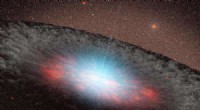
* Supernova Explosion: A nearby supernova explosion could create a powerful shockwave that could significantly alter a planet's orbit.
* Gamma Ray Burst: A powerful gamma ray burst directed at a planet could have a catastrophic impact on its atmosphere and potentially disrupt its orbit.
Important to Note:
* These scenarios are extremely rare and often involve events that are incredibly powerful and destructive.
* Even in the case of a significant orbit change, it is unlikely that a planet would be "knocked out" of its solar system entirely. More likely, its orbit would be significantly altered, potentially leading to instability or a different path within the system.
In summary: While incredibly unlikely, events like close encounters with massive objects, stellar evolution, or external forces like supernovae could dramatically alter a planet's orbit. However, these events are incredibly rare and would need to be of immense magnitude to completely knock a planet out of its solar system.