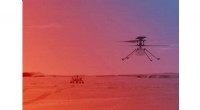
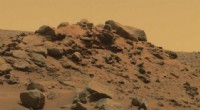
While we've sent robotic probes to explore other planets and moons, landing humans on another celestial body presents significant challenges:
* Distance: Space travel is incredibly long and expensive.
* Atmosphere and gravity: Many planets and moons have atmospheres that are either too thin or too dense for humans to breathe, or gravity that would be either too weak or too strong for our bodies.
* Radiation: Some celestial bodies have intense radiation levels that could be fatal to humans.
* Temperature: Extreme temperatures, both hot and cold, pose a danger to humans.
* Resources: Sustaining life on another world would require the ability to produce food, water, and breathable air.
Future possibilities:
* Mars: Mars is the most likely candidate for future human settlements. While it has a thin atmosphere and low gravity, it has some potential for terraforming and is relatively close to Earth.
* The Moon: The Moon is another potential destination for human exploration and even potential settlements. It's closer than Mars, and scientists are exploring ways to establish a lunar base.
Other celestial bodies:
* Venus: Venus is incredibly hot and has a dense atmosphere that would crush any spacecraft.
* Jupiter, Saturn, Uranus, Neptune: These gas giants lack a solid surface for landing.
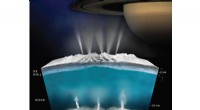
* Other moons: Some moons in our solar system, like Europa (moon of Jupiter) and Titan (moon of Saturn), are potentially interesting for future exploration, but they also present challenges.
It's important to note that technological advancements and ongoing research are constantly pushing the boundaries of what's possible in space exploration. While setting foot on other planets is still a challenging endeavor, it's not impossible and remains a goal for future generations.