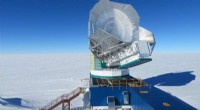
* Temperature: The CMB has a temperature of about 2.7 Kelvin, which is just a few degrees above absolute zero. This temperature is incredibly low, and the radiation is in the microwave portion of the electromagnetic spectrum.
* Near-perfect blackbody spectrum: The CMB radiation follows a blackbody spectrum very closely, meaning it emits radiation at all wavelengths but with a peak at a specific wavelength determined by its temperature. This is a strong piece of evidence supporting the Big Bang theory.
* Anisotropy: While the CMB is remarkably uniform across the sky, it does have small variations in temperature called anisotropies. These anisotropies are extremely tiny, only a few parts in 100,000, but they provide crucial information about the early universe, including the formation of the first stars and galaxies.
* Polarization: The CMB radiation is also polarized, meaning that the waves have a preferred direction of oscillation. This polarization is also linked to the early universe and provides further evidence for the Big Bang theory.
In summary, the CMB is a powerful tool for studying the early universe. Its temperature, blackbody spectrum, anisotropies, and polarization provide clues about the conditions that existed shortly after the Big Bang. Studying the CMB is like looking back in time to the very beginning of the universe.