1. Remote Sensing:
* Spectroscopy: Analyzing the light reflected or emitted by a planet reveals the presence and abundance of certain elements and molecules in its atmosphere and surface. Different elements and molecules absorb and emit light at specific wavelengths, allowing scientists to identify their presence.
* Polarimetry: Measuring the polarization of light reflected by a planet can reveal information about the composition and structure of its atmosphere and surface.
* Radiometry: Studying the heat emitted by a planet reveals its internal temperature and can provide clues about its composition and internal processes.
2. Spacecraft Missions:
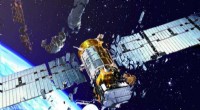
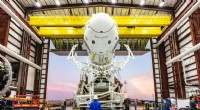
* Flybys: Spacecraft passing by a planet can collect data about its atmosphere, magnetic field, and surface features using instruments like spectrometers and cameras.
* Orbiters: Spacecraft orbiting a planet provide more detailed and long-term observations of its atmosphere, surface, and gravity field, leading to a better understanding of its composition.
* Landers: Spacecraft that land on a planet's surface can directly analyze its rocks, soil, and atmosphere, providing crucial information about its composition.
3. Gravity Measurements:
* Doppler Tracking: Measuring the tiny changes in a spacecraft's velocity due to a planet's gravitational pull can reveal the planet's mass and density, providing insights into its internal structure and composition.
* Gravitational Lensing: Studying how a planet's gravity bends the light from distant stars can also reveal information about its mass and density.
4. Seismic Waves:
* Internal Structure: Studying the propagation of seismic waves generated by earthquakes or impacts on a planet can reveal details about its internal structure, including the composition of its core, mantle, and crust.
5. Meteorites:
* Primordial Material: Studying meteorites that originate from asteroids and comets can provide clues about the composition of the early solar system and the building blocks of planets.
Challenges and Limitations:
* Distance: The vast distances to planets make detailed observations challenging.
* Atmospheric Obstacles: Thick atmospheres can obscure the surface and make it difficult to study the planet's composition directly.
* Limited Data: Often, only a limited amount of data is available, requiring scientists to make inferences and assumptions.
Conclusion:
Determining the composition of a planet requires a multifaceted approach combining remote sensing, spacecraft missions, gravity measurements, seismic waves, and the study of meteorites. Each method provides valuable insights, but limitations exist due to distance, atmospheric obstacles, and limited data. As technology advances, our understanding of planetary composition continues to improve.