Kepler's Contributions:
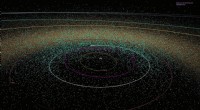
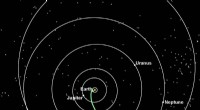
* Three Laws of Planetary Motion: Kepler's laws described the elliptical orbits of planets around the sun, revolutionizing our understanding of planetary movement. He challenged the long-held belief of perfectly circular orbits.
* Heliocentric Model: Kepler built upon Copernicus's heliocentric model, which placed the sun at the center of the solar system. He provided mathematical support for this model.
Modern Solar System Model:
* Newton's Law of Universal Gravitation: Isaac Newton's laws of motion and gravity provided the mathematical framework that explained why planets move in the way they do.
* Further Discoveries: Later discoveries like the existence of other galaxies, the Kuiper belt, and the Oort cloud expanded our understanding of the solar system's place in the universe.
In essence: Kepler was a crucial figure in understanding planetary motion and the heliocentric model, but the modern solar system model is a result of centuries of scientific inquiry and the work of many individuals.