1. Eclipse:
* Solar Eclipse: If the object in between is the Moon, it can block the Sun's light from reaching Earth, creating a solar eclipse. This happens because the Moon's orbit is tilted slightly compared to Earth's orbit around the Sun.
* Lunar Eclipse: If the object in between is the Earth, it can block the Sun's light from reaching the Moon, creating a lunar eclipse.
2. Transit:
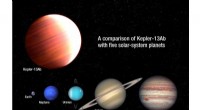
* A transit occurs when a smaller object passes directly between a larger object and the observer. In this case, the third object observes the smaller object crossing in front of the Sun. This is a common occurrence for planets orbiting other stars, and it's how we discover exoplanets.
* Transit of Venus: A rare event where Venus passes between the Sun and Earth.
3. Occultation:
* An occultation occurs when a closer object blocks the light of a more distant object from an observer. This can happen when a star is hidden by the Moon, or a satellite is hidden by a planet.
4. Shadow:
* The object in between casts a shadow on the third object. This shadow can be observed as a dark region on the third object.
5. Gravitational Effects:
* The object in between can exert a gravitational pull on the third object, influencing its orbit or causing tidal forces.
Other Considerations:
* The size, distance, and composition of the objects involved play a crucial role in determining the type of event that occurs.
* Observational perspective: What we see depends on our position as observers.
In essence, the interaction between these three celestial objects can result in a variety of phenomena, from spectacular eclipses to subtle gravitational effects.