Inner Planets (Terrestrial Planets)
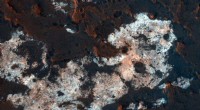
* Location: Closer to the Sun
* Composition: Mostly made of rock and metal (solid surface)
* Size: Relatively small and dense
* Moons: Few or no moons
* Atmosphere: Thin or no atmosphere
* Examples: Mercury, Venus, Earth, Mars
Outer Planets (Gas Giants)
* Location: Farther from the Sun
* Composition: Mostly made of gas (hydrogen and helium) with a small, rocky core
* Size: Huge and less dense
* Moons: Many moons
* Atmosphere: Thick atmospheres
* Examples: Jupiter, Saturn, Uranus, Neptune
Key Differences in Summary:
* Composition: Inner planets are rocky, outer planets are gaseous.
* Size: Inner planets are smaller and denser, outer planets are larger and less dense.
* Location: Inner planets are closer to the Sun, outer planets are farther away.
This difference in composition and location is largely due to the temperature gradient within the early solar system. The inner planets were closer to the Sun and experienced higher temperatures, which caused volatile compounds like hydrogen and helium to evaporate. This left behind heavier elements like rock and metal to form the inner planets. The outer planets, being farther away, were cooler, allowing for the formation of gas giants.