1. Energy Source:
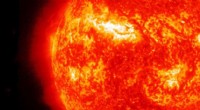
* Main sequence stars: Fuse hydrogen into helium in their core, generating energy via nuclear fusion. This is what makes them shine.
* White dwarfs: No longer undergo nuclear fusion. They are essentially the remnants of the cores of stars that have exhausted their nuclear fuel. They are cooling down and radiating away the heat from their past fusion.
2. Size and Density:
* Main sequence stars: Large and relatively diffuse.
* White dwarfs: Extremely dense, packing the mass of the sun into the size of the Earth. This makes them incredibly compact.
3. Composition:
* Main sequence stars: Primarily composed of hydrogen and helium, with trace amounts of heavier elements.
* White dwarfs: Composed mainly of carbon and oxygen, the remnants of the fusion process in the original star.
4. Temperature and Luminosity:
* Main sequence stars: Hot and luminous, with a wide range of temperatures and luminosities depending on their mass.
* White dwarfs: Initially very hot, but cool down over time. Their luminosity is very low, making them faint.
5. Evolution:
* Main sequence stars: Currently undergoing nuclear fusion and evolving towards becoming red giants or supergiants.
* White dwarfs: Represent the final stage in the evolution of low-to-medium mass stars. They are no longer evolving significantly, slowly cooling down over billions of years.
6. Stability:
* Main sequence stars: Held together by the outward pressure from nuclear fusion and the inward pull of gravity, creating a stable equilibrium.
* White dwarfs: Supported against collapse by electron degeneracy pressure. This is a quantum mechanical phenomenon that prevents electrons from occupying the same energy state. This pressure is strong enough to resist gravity and maintain the white dwarf's stability.
In summary: While both main sequence stars and white dwarfs are stars, they are at different stages of their life cycle, with different energy sources, compositions, and physical characteristics. White dwarfs are the dense, cool remnants of stars that have exhausted their nuclear fuel, and they represent the final stage of evolution for many stars.