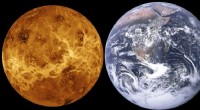
Venus's atmosphere is a toxic and incredibly dense one, making it very different from Earth's. Here's a breakdown of its key characteristics:
Composition:
* Carbon Dioxide (CO2): Makes up over 96% of the atmosphere, creating a powerful greenhouse effect.
* Nitrogen (N2): The second most abundant gas, at about 3.5%.
* Other Trace Gases: Sulfur dioxide, argon, carbon monoxide, water vapor, and helium are present in smaller quantities.
Extreme Temperatures:
* Surface Temperature: A scorching 464°C (867°F), hot enough to melt lead! This is due to the runaway greenhouse effect caused by the dense CO2 atmosphere.
* Pressure: At the surface, the atmospheric pressure is 92 times that of Earth's, equivalent to being nearly 1 kilometer (0.6 miles) beneath the ocean.
Clouds of Sulfuric Acid:
* Thick Clouds: Thick, opaque clouds of sulfuric acid cover the entire planet.
* Highly Reflective: These clouds reflect sunlight, making Venus the brightest object in the sky after the Sun and Moon.
* Acid Rain: While liquid water cannot exist on Venus due to the high temperature, sulfuric acid rain falls from the clouds, but evaporates before reaching the surface.
Wind and Circulation:
* Slow Winds: Winds near the surface are relatively slow, but the atmosphere circulates rapidly around the planet.
* Super Rotation: The upper atmosphere rotates much faster than the planet itself, completing a circuit in just four days.
A Summary:
Venus's atmosphere is a harsh and unforgiving environment. The extremely high temperatures, crushing pressure, and toxic clouds make it impossible for any life as we know it to exist on the surface.
Important Note: While we have studied Venus extensively, there is still much we don't know about its atmosphere. Ongoing research continues to reveal fascinating details about this extreme planet.