1. Challenging Dogma: Greek authorities like Aristotle held immense influence for centuries, their ideas often taken as absolute truths. The Renaissance saw a renewed interest in classical learning, but also a critical examination of these texts. Thinkers like Copernicus, Galileo, and Kepler started questioning long-held Aristotelian ideas about the universe, leading to the development of heliocentric theory and a new understanding of celestial motion.
2. Empiricism and Observation: The emphasis on observation and experiment was a major departure from the reliance on ancient authorities. Scientists began to look to the natural world for answers, challenging the theoretical frameworks of the past. This shift towards empirical evidence was crucial for the advancement of astronomy, physics, and biology.
3. Focus on Human Reason: The Renaissance saw a resurgence of humanism, which emphasized human reason and the power of the individual to understand the world. This spirit of inquiry and questioning encouraged scientists to think for themselves, independent of ancient dogma.
4. Technological Advancements: The development of new tools and instruments, like the telescope and microscope, allowed scientists to make observations and experiments that were previously impossible. These advancements further fueled the move away from relying solely on ancient authorities and towards empirical verification.
5. Printing Press: The invention of the printing press facilitated the widespread dissemination of new ideas and theories. This allowed for greater discussion and debate, challenging established views and paving the way for new discoveries.
Examples:
* Copernicus's heliocentric model: Copernicus challenged Ptolemy's geocentric model, which had been accepted for centuries. He proposed that the Earth revolves around the Sun, based on his observations and calculations.
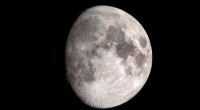
* Galileo's observations with the telescope: Galileo's observations of the moon, sunspots, and Jupiter's moons provided evidence that contradicted the Aristotelian view of a perfect and unchanging celestial sphere.
* Newton's laws of motion: Newton's work on gravity and motion provided a new, mathematical framework for understanding the physical world, replacing the Aristotelian system.
In conclusion, the doubting of Greek authorities during the Renaissance and the Scientific Revolution was not a rejection of their knowledge entirely, but rather a recognition that their ideas needed to be tested and refined. This critical approach, combined with the pursuit of empirical evidence and the power of human reason, paved the way for a new era of scientific discovery and progress.