The Basic Principle
A telescope acts like a giant magnifying glass, focusing light from distant objects to create a magnified image. It does this using a combination of lenses or mirrors:
1. Gathering Light:
* Refracting Telescopes: These use lenses (typically convex) to bend incoming light. The primary lens gathers light from a wide area and focuses it onto a point.
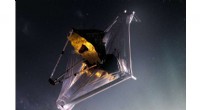
* Reflecting Telescopes: These use mirrors to reflect light. The primary mirror is curved, and it gathers and reflects light towards a secondary mirror.
2. Focusing and Magnification:
* Focal Point: The focused point of light from the primary lens or mirror is called the focal point.
* Focal Length: The distance between the primary lens/mirror and the focal point is called the focal length.
* Eyepiece: A smaller lens (the eyepiece) is placed near the focal point. The eyepiece acts like a magnifying glass, taking the focused image and magnifying it further.
3. The Final Image:
* Real Image: The light focused by the primary lens/mirror creates a real image at the focal point. This image is inverted (upside down).
* Virtual Image: The eyepiece then magnifies this real image, creating a virtual image that is seen by the observer. This virtual image is upright (because the telescope inverts the image twice, once by the primary lens/mirror and once by the eyepiece).
How Light Path Affects Image:
* Refracting Telescopes: Light travels through the lenses, refracting (bending) as it passes from air to glass and back.
* Reflecting Telescopes: Light bounces off the mirrors. This minimizes distortion caused by the varying refractive indices of different wavelengths of light (a phenomenon called chromatic aberration).
Additional Notes:
* Magnification: The magnification of a telescope is determined by the ratio of the focal length of the primary lens/mirror to the focal length of the eyepiece.
* Resolution: The ability of a telescope to distinguish between two closely spaced objects is called resolution. This is determined by the diameter of the primary lens/mirror. Larger telescopes have better resolution.
Summary:
A telescope uses lenses or mirrors to gather light from distant objects, focusing it to a point (the focal point). An eyepiece then magnifies the focused image, creating a virtual image for the observer to see. The final image is magnified and inverted by the telescope.