1. Challenging the Geocentric Model:
* The Church's View: For centuries, the Church had held that the Earth was the center of the universe (geocentrism), a belief based on the teachings of Aristotle and supported by Scripture.
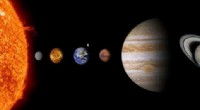
* Galileo's Discoveries: Through his observations with the telescope, Galileo discovered evidence supporting the heliocentric model, which had been proposed by Nicolaus Copernicus. He found that Venus had phases like the Moon, which could only be explained if it orbited the Sun. He also observed moons orbiting Jupiter, proving that not everything revolved around the Earth.
2. Conflict with the Church:
* Initial Support: Initially, the Church seemed open to Galileo's findings. Pope Urban VIII even encouraged him to publish his work, but with the caveat that he present the heliocentric model as a hypothesis, not a definitive truth.
* "Dialogue on the Two Chief World Systems": Galileo published his "Dialogue on the Two Chief World Systems," which was essentially a debate between the geocentric and heliocentric viewpoints. However, the character representing the geocentric view was depicted as foolish and inept, infuriating the Church.
3. Heresy Accusations:
* Inquisition Trial: The Church accused Galileo of violating the Pope's instructions by presenting the heliocentric model as factual, even though it contradicted the official Church doctrine. He was tried by the Inquisition in 1633.
* Guilty Verdict: Galileo was found guilty of heresy and sentenced to house arrest for the rest of his life. He was forced to publicly recant his support for the heliocentric model.
Why was it such a big deal?
* Religious Authority: The Church held immense power and influence during Galileo's time. To question its interpretation of Scripture was seen as a direct challenge to its authority.
* Social and Scientific Implications: The heliocentric model had significant implications for the understanding of the universe and humanity's place within it. This challenged the established order and created fear and anxiety.
Important to note:
* Rehabilitation: The Catholic Church officially rehabilitated Galileo in 1992, acknowledging its error in condemning him.
* Legacy: Galileo's case is a reminder of the tension between science and religion and the importance of free inquiry. It also highlights the significant power of religious institutions in shaping scientific discourse and societal beliefs.