Evidence for Gas:
* Spectral lines: We observe specific spectral lines emitted by various atoms and molecules present in the ISM, including:
* Neutral hydrogen (HI): The 21 cm line is a primary indicator of neutral hydrogen in the ISM.
* Other atoms and molecules: Emission and absorption lines from carbon, oxygen, nitrogen, and various molecules like CO, H2O, and OH confirm the presence of these species.
* Radio waves: Observations of radio waves from the ISM reveal the presence of free electrons, which are characteristic of ionized gas.
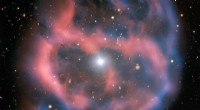
* Supernova remnants: These expanding clouds of gas and dust are formed by the explosive deaths of stars. The spectral lines observed in supernova remnants clearly show the presence of various atoms and molecules.
* Star formation: The collapse of clouds of gas and dust in the ISM is the primary mechanism for star formation. This process requires both gas and dust to initiate and proceed.
Evidence for Dust:
* Extinction: The absorption and scattering of light by dust particles cause a dimming and reddening of starlight, especially at shorter wavelengths. This phenomenon, known as extinction, is a strong indication of the presence of dust in the ISM.
* Polarization: The scattering of light by dust particles can cause the polarization of starlight. This polarization is another signature of dust grains in the ISM.
* Infrared emission: Dust particles in the ISM absorb ultraviolet and visible light and re-emit it at longer wavelengths in the infrared. Infrared observations reveal the presence of dust and its distribution in the ISM.
* Molecular clouds: These dense, cold clouds are rich in dust, which acts as a catalyst for the formation of molecules.
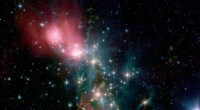
* Reflecting nebulae: These nebulae are illuminated by nearby stars, but the light we see is not coming directly from the star. Instead, the dust grains are reflecting the light from the star, creating a blue glow.
Combined Evidence:
The evidence for gas and dust in the ISM is intertwined. For example, the presence of dust in the ISM is essential for the formation of molecules, which we detect through their spectral lines. Similarly, the existence of molecules and the presence of ionization in the ISM provide evidence for the presence of gas.
These combined observations leave no doubt about the composition of the ISM as a mixture of gas and dust, a crucial ingredient in the evolution of galaxies.