Here's a breakdown:
Spectrometer:
* Function: Breaks down light into its constituent wavelengths (colors), providing information about the composition, temperature, and motion of the source.
* Components:
* Entrance slit: Selects a narrow beam of light to enter the spectrometer.
* Dispersing element: (e.g., prism or diffraction grating) separates light into its different wavelengths.
* Detector: Measures the intensity of light at each wavelength.
Telescope:
* Function: Collects light from distant objects, making them appear brighter and larger.
* Components:
* Objective lens/mirror: Gathers and focuses light.
* Eyepiece: Magnifies the image for viewing.
How They Work Together:
1. Telescope collects light: A telescope, like a giant light bucket, gathers as much light as possible from a distant source, such as a star or galaxy.
2. Light directed to spectrometer: The collected light is then directed towards the spectrometer using a system of mirrors or lenses.
3. Spectrometer analyzes light: The spectrometer breaks down the collected light into its different wavelengths, revealing the object's chemical composition, temperature, and other properties.
Therefore, the telescope acts as a crucial "front-end" to the spectrometer, ensuring a sufficient amount of light is gathered to be analyzed effectively.
Examples:
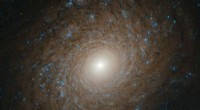
* Astronomical spectroscopy: Telescopes on Earth and in space are used to gather light from stars, galaxies, and other celestial objects for spectroscopic analysis.
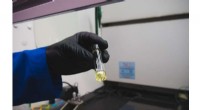
* Laboratory spectroscopy: While telescopes are not typically used, specialized optical systems can be used to focus and guide light from a sample onto a spectrometer.
In summary, telescopes do not directly function within a spectrometer. Instead, they serve as essential tools for collecting and focusing light, making it possible for spectrometers to analyze the light and reveal valuable information about its source.