Top 3:
1. Saturn (83 confirmed moons): Saturn is the undisputed champion of moons, with an impressive 83 confirmed moons, and scientists believe it likely has even more waiting to be discovered. Its moons are incredibly diverse, ranging from tiny, icy bodies to the giant Titan, which is larger than the planet Mercury!
2. Jupiter (79 confirmed moons): Jupiter comes in a close second, boasting 79 confirmed moons. Like Saturn, Jupiter's moon system is a diverse mix, including the volcanic Io, the icy Europa, and the giant Ganymede (the largest moon in our solar system).
3. Uranus (27 confirmed moons): Uranus, the ice giant, holds a respectable third place with 27 confirmed moons. While its moons are smaller than those of Jupiter and Saturn, they still offer intriguing features like the dark and mysterious Umbriel.
Other Planets with Moons:
* Neptune (14 confirmed moons): Neptune has 14 confirmed moons, with Triton being the largest and most interesting, due to its retrograde orbit (it circles the planet in the opposite direction from Neptune's rotation).
* Mars (2 confirmed moons): Mars has two tiny moons, Phobos and Deimos, which are likely captured asteroids.
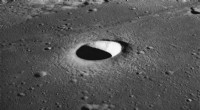
* Earth (1 confirmed moon): Earth, of course, has our beloved moon, which plays a crucial role in stabilizing our planet's rotation and influencing tides.
A Note on "Moon" Counts:
It's important to note that the number of confirmed moons is constantly evolving. As technology improves, astronomers continue to discover new moons around planets in our solar system. So, the top 3 might change in the future!