1. The Birth of a Star:
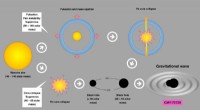
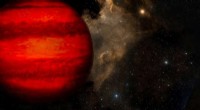
* Our solar system started as a giant cloud of gas and dust called a nebula.
* Gravity pulled this material together, causing it to spin and heat up.
* Eventually, the core of the nebula became so hot that it ignited, forming our Sun.
2. The Protoplanetary Disk:
* The leftover material orbiting the young Sun formed a disk called a protoplanetary disk.
* This disk was made of gas, dust, and ice, all swirling around the Sun.
3. Formation of Planets:
* Inner Planets: Closer to the Sun, it was too hot for ices to survive. Smaller, rocky planets like Mercury, Venus, Earth, and Mars formed from the remaining dust and rock.
* Outer Planets: Farther out, ices could survive. These ices attracted more gas and dust, forming the giant gas and ice giants – Jupiter, Saturn, Uranus, and Neptune.
4. Gravitational Interactions:
* The planets, as they formed, interacted gravitationally.
* This caused some planets to migrate inward or outward, influencing their final positions.
* In the early solar system, there were likely more planetary bodies that were ejected or collided with others, contributing to the final configuration we see today.
The Order Makes Sense:
* Density: The rocky inner planets are denser than the gas giants further out. This makes sense because denser materials are more likely to survive closer to the hot Sun, where lighter materials would have evaporated.
* Composition: The outer planets are mostly composed of hydrogen and helium, which were abundant in the early solar system. They also contain ices like water, ammonia, and methane, which could survive the colder temperatures farther from the Sun.
In Conclusion:
The order of planets in our solar system is a direct result of the processes that formed the solar system itself. It's a beautiful example of how physics and gravity shaped the celestial bodies we see today!