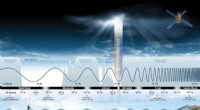
1. Electromagnetic Spectrum Observations: This encompasses the vast majority of astronomical observations. We collect data across the electromagnetic spectrum, from radio waves with the longest wavelengths to gamma rays with the shortest. Examples include:
* Radio astronomy: Observing radio waves emitted by celestial objects, such as pulsars, galaxies, and the cosmic microwave background.
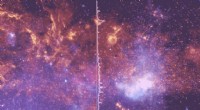
* Infrared astronomy: Observing infrared radiation, which can penetrate dust clouds, revealing stars forming within them and the heat signatures of planets.
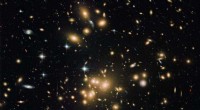
* Optical astronomy: Observing visible light, the range our eyes can see, allowing us to study stars, planets, nebulae, and galaxies.
* Ultraviolet astronomy: Observing ultraviolet radiation, emitted by hot stars and active galaxies, helping us understand stellar atmospheres and galaxy evolution.
* X-ray astronomy: Observing X-rays, produced by high-energy events like black holes, supernova remnants, and active galaxies.
* Gamma-ray astronomy: Observing gamma rays, the highest-energy photons, originating from cosmic explosions, pulsars, and black holes.
2. Gravitational Wave Astronomy: This relatively new field involves detecting gravitational waves, ripples in the fabric of spacetime caused by massive cosmic events. These observations allow us to study the mergers of black holes and neutron stars, providing insights into gravity and the structure of the universe.
3. Neutrino Astronomy: Neutrinos are subatomic particles that interact very weakly with matter, making them difficult to detect. However, they can provide information about the Sun's interior, supernovae, and distant cosmic events. Neutrino observatories are typically located deep underground to shield them from interfering radiation.
These categories encompass a wide range of astronomical observations, each offering unique insights into the universe.