1. Rotation Period:
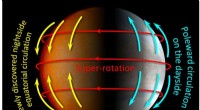
* Sun: The Sun rotates differentially, meaning different parts rotate at different speeds. At the equator, it takes about 25 days to complete one rotation. Near the poles, it takes about 36 days.
* Earth: Earth rotates uniformly, taking approximately 24 hours to complete one rotation.
2. Axis of Rotation:
* Sun: The Sun's axis of rotation is tilted at an angle of 7.25 degrees to its orbital plane. This tilt is very small compared to Earth's tilt.
* Earth: Earth's axis of rotation is tilted at an angle of 23.5 degrees to its orbital plane. This tilt is responsible for the seasons.
3. Rotation Direction:
* Sun: The Sun rotates in the same direction as Earth – counterclockwise when viewed from the North Pole.
* Earth: Also rotates counterclockwise when viewed from the North Pole.
4. Internal Structure:
* Sun: The Sun is a giant ball of gas and plasma, with a complex internal structure. Its rotation is affected by its internal dynamics and magnetic field.
* Earth: Earth is a solid, rocky planet with a core, mantle, and crust. Its rotation is mainly driven by the conservation of angular momentum.
5. Observational Differences:
* Sun: Due to its gaseous nature, it is difficult to observe the rotation of the Sun directly. Astronomers rely on observing sunspots and other features to track its rotation.
* Earth: We can easily observe Earth's rotation through the rising and setting of the Sun, the movement of stars in the night sky, and the Coriolis effect.
In summary:
The Sun and Earth have distinct rotation patterns due to their different compositions, internal structures, and external influences. The Sun's rotation is complex and variable, while Earth's rotation is relatively simple and consistent.