* Space Shuttles are not designed for interstellar travel: They were designed for low Earth orbit missions, not for traveling vast distances between stars. They lack the necessary speed, fuel capacity, and shielding for such a journey.
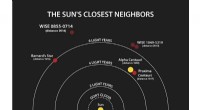
* The nearest star is incredibly far away: The closest star to our Sun is Proxima Centauri, which is approximately 4.24 light-years away. A light-year is the distance light travels in one year, and light travels at an incredible speed of 299,792 kilometers per second.
* Space Shuttles are relatively slow: They were designed to travel at speeds of around 28,000 kilometers per hour (17,000 miles per hour). Even at this speed, it would take the Shuttle millions of years to reach Proxima Centauri.
To put it in perspective, the Space Shuttle would have to travel for tens of thousands of times longer than the age of the universe to reach the nearest star.
To travel to other stars, we would need completely different technology, such as:
* Advanced propulsion systems: These could include nuclear fusion rockets, ion drives, or even hypothetical concepts like warp drives.
* Long-duration life support systems: To sustain humans for the incredibly long journey.
* Radiation shielding: To protect against the dangers of interstellar radiation.
While interstellar travel remains a dream for now, scientists and engineers are constantly working on developing the technologies that might one day make it possible.