1. Extreme Mass Concentration: Black holes are incredibly dense objects, packing a vast amount of mass into an extremely small space. This extreme concentration of mass creates a tremendously strong gravitational field.
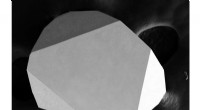
2. Event Horizon: The event horizon is the boundary surrounding a black hole. This boundary is defined by the point of no return, where the escape velocity exceeds the speed of light. Anything that crosses the event horizon, including light, cannot escape the black hole's gravitational pull.
Here's a more detailed explanation:
* Gravity's Dependence on Mass and Distance: The force of gravity is directly proportional to the mass of an object. The more massive an object, the stronger its gravitational pull. Furthermore, gravity decreases with distance. The closer you are to a massive object, the stronger the gravitational force you experience.
* Black Holes' Extreme Mass Concentration: Black holes form when massive stars collapse under their own gravity. This collapse squeezes an enormous amount of matter into an incredibly small volume. The result is an object with an extremely high density, meaning its mass is tightly packed.
* Event Horizon's Role: The event horizon is a consequence of this extreme density. The escape velocity at the event horizon equals the speed of light. Since nothing can travel faster than light, anything that crosses this boundary is trapped forever.
In summary: The intense gravity near a black hole is a result of its incredible mass concentrated within a tiny volume. This extreme density creates a gravitational field so strong that even light cannot escape from within the event horizon.