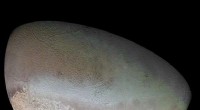
Planets:
* Larger Size: Planets are significantly larger than dwarf planets.
* Dominant Gravity: They have enough gravity to clear their orbital path of other objects. This means they have "cleaned up" their neighborhood in space.
* Round Shape: Planets are generally spherical due to their strong gravitational pull.
Dwarf Planets:
* Smaller Size: Dwarf planets are smaller than planets.
* Shared Orbital Path: They may share their orbital path with other celestial bodies of comparable size.
* Not Always Round: Dwarf planets may be irregular in shape, sometimes even potato-like.
Here's a table to illustrate the size difference (approximate diameters):
| Object | Diameter (km) |
|-------------------|----------------|
| Planets | |
| Mercury | 4,880 |
| Venus | 12,104 |
| Earth | 12,742 |
| Mars | 6,779 |
| Jupiter | 142,984 |
| Saturn | 120,536 |
| Uranus | 51,118 |
| Neptune | 49,528 |
| Dwarf Planets | |
| Pluto | 2,376 |
| Eris | 2,326 |
| Makemake | 1,430 |
| Haumea | 1,632 |
| Ceres | 946 |
Key Points:
* Size is not the only factor: The definition of a planet includes clearing its orbital path and being spherical.
* Dwarf planets are still important: They provide valuable insights into the early solar system and the formation of planets.
* There are many more dwarf planets: The number of dwarf planets is likely much greater than those we have discovered so far.
Let me know if you have any other questions!