1. The Big Bang and Early Universe
* 13.8 Billion Years Ago: The Big Bang occurred, initiating the expansion of the universe from a singularity.
* First Few Seconds: The universe was incredibly hot and dense, composed of fundamental particles. As it expanded and cooled, these particles began to combine, forming protons and neutrons.
* Hundreds of Thousands of Years: Hydrogen and Helium atoms formed. The early universe was filled with a hot, uniform fog of these elements.
2. The Birth of Stars and Galaxies
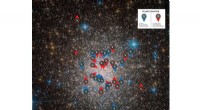
* Millions of Years: Gravity began to pull together clumps of hydrogen and helium, forming the first stars.
* Billions of Years: Stars formed into galaxies, creating the large-scale structures we see today.
* Supernovae: Massive stars eventually explode as supernovae, scattering heavier elements (like carbon, oxygen, iron, and silicon) into space.
3. The Solar Nebula
* 4.5 Billion Years Ago: A cloud of gas and dust (the solar nebula) collapsed under its own gravity, forming a spinning disk.
* The Sun's Formation: The core of the nebula became the Sun, ignited by nuclear fusion.
* Planetesimals: Dust and gas within the spinning disk began clumping together, forming small, rocky bodies called planetesimals.
4. Earth's Formation
* Planetesimal Collisions: Over millions of years, planetesimals collided and merged, growing larger.
* Formation of Earth: The final stages involved the accretion of massive planetesimals, forming the planet we know today.
* Volcanic Activity: Earth's interior was intensely hot, leading to widespread volcanic activity.
* Early Atmosphere: Volcanic eruptions released gases, forming Earth's first atmosphere.
5. Earth's Evolution
* Cooling and Differentiation: Earth's interior gradually cooled, leading to the differentiation of its layers (core, mantle, crust).
* Formation of Oceans: As Earth cooled further, water vapor condensed, forming the oceans.
* Early Life: The first life forms arose in the oceans, likely simple single-celled organisms.
Key Points
* Gravitational Collapse: Gravity played a key role in forming both the Sun and Earth.
* Accretion: The Earth grew through the collision and merging of smaller bodies.
* Supernovae: Supernovae were crucial in creating the heavier elements that make up Earth.
* Time Scale: The formation of Earth and the solar system took billions of years.
Ongoing Research
Scientists continue to study the early universe, the formation of stars and planets, and the early history of Earth to gain a deeper understanding of our planet's origins.