* Massive Star Life Cycle: High-mass stars (8 to 20 times the mass of our Sun) live fast and die young. Their cores are much hotter and denser than those of smaller stars.
* Fusion Cycle: They fuse lighter elements into heavier ones, going all the way up to iron. Iron fusion does not release energy, so the core collapses rapidly.
* Core Collapse: The collapse is incredibly fast and violent, compressing the core to an incredibly small volume. This enormous pressure crushes protons and electrons together, forming neutrons.
* Neutron Star Formation: The core becomes a neutron star – a incredibly dense object composed primarily of neutrons. Neutron stars are only about 20 kilometers in diameter (about the size of a city) but have a mass greater than our Sun.
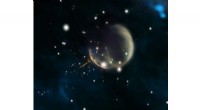
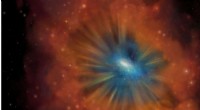
* Supernova Explosion: The collapse of the core triggers a massive explosion called a supernova. The outer layers of the star are ejected into space, leaving behind the neutron star.
Not all high-mass stars form neutron stars:
* Black Hole Formation: If the core of a high-mass star is massive enough (over about 25 times the mass of our Sun), the collapse will continue past the neutron star stage and form a black hole.
So, in summary, the core of a high-mass star typically becomes a neutron star, but stars with very massive cores can form black holes instead.