Here's a breakdown:
Planets Easily Visible with a Telescope:
* Jupiter: The largest planet in our solar system, Jupiter is a stunning sight with its red spot and swirling cloud bands. Even a small telescope will reveal these features.
* Saturn: Famous for its beautiful ring system, Saturn is a must-see for any telescope user. The rings are visible even with a modest telescope.
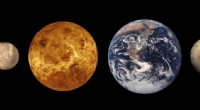
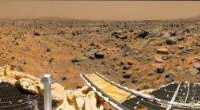
* Mars: The "Red Planet" is a bit smaller than Earth and appears reddish-orange in a telescope. You can sometimes see its polar ice caps and even some surface features.
* Venus: While Venus is the brightest object in the night sky after the Moon, its dense atmosphere makes it difficult to see surface features. You can observe its phases, similar to the Moon.
* Mercury: The smallest and innermost planet is challenging to observe due to its proximity to the Sun. You'll need a telescope and good viewing conditions to catch a glimpse.
Other Planets:
* Uranus and Neptune: These distant ice giants are fainter and require a larger telescope to see their faint disks.
Important Considerations:
* Telescope Size: A larger telescope will show more detail. A good starting point is a 6-inch reflector telescope.
* Location: Choose a dark location with minimal light pollution for optimal viewing.
* Time of Year: Different planets are visible at different times of year. Consult a star chart or astronomy app to find when a planet will be visible in your sky.
Remember:
* Using a telescope requires practice and patience. Don't get discouraged if you don't see perfect detail right away.
* Start with the brightest planets like Jupiter and Saturn.
* Join a local astronomy club for tips and guidance.
Happy stargazing!