Natural satellites are celestial bodies that orbit a planet, dwarf planet, or even another satellite. They are also known as moons, although the term "moon" is often specifically used for Earth's natural satellite.
Here are some key characteristics of natural satellites:
* They orbit a larger body: This is the defining feature of a natural satellite. They are gravitationally bound to a larger celestial object and follow its orbit around the Sun.
* They are not stars: Natural satellites don't produce their own light. Instead, they reflect light from their host star.
* They come in all shapes and sizes: From the tiny moonlets of Mars to the massive moons of Jupiter and Saturn, natural satellites come in various sizes and compositions.
* They can be rocky, icy, or a mixture of both: The composition of natural satellites depends on their formation and location in the solar system.
Some well-known examples of natural satellites include:
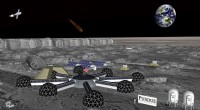
* The Moon: Earth's only natural satellite, the Moon, plays a crucial role in Earth's tides and stabilizing its axis.
* Ganymede and Callisto: These are two of Jupiter's largest moons and are even larger than the planet Mercury.
* Titan: Saturn's largest moon, Titan, is the only moon in our solar system known to have a dense atmosphere and lakes of liquid methane.
* Triton: Neptune's largest moon, Triton, is a geologically active world with cryovolcanoes that erupt nitrogen ice.
Why are natural satellites important?
* They provide valuable insights into the formation and evolution of planetary systems: Studying natural satellites helps us understand the early stages of planet formation and how they interact with their host planets.
* They offer potential habitats for future exploration: Some moons, like Europa and Enceladus, are thought to possess subsurface oceans that could potentially harbor life.
* They play significant roles in planetary systems: Natural satellites can influence the stability of their host planets' orbits and atmospheres.
In conclusion, natural satellites are fascinating celestial bodies that offer a glimpse into the diverse and dynamic nature of our solar system. They are not just lifeless rocks orbiting planets, but rather unique worlds with their own stories and secrets waiting to be uncovered.