Here's why:
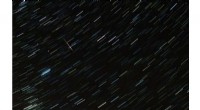
* Earth's Rotation: The Earth rotates on its axis, completing one rotation roughly every 24 hours. As the Earth spins, we see the stars appear to move across the sky in a circular path, just like the Sun and the Moon. This is similar to how a merry-go-round makes people on it appear to move, even though they're standing still.
* Distance: Stars are incredibly far away. Their movements are minuscule relative to their vast distance, and they appear almost stationary to our naked eyes.
* Time: While the stars *do* move in relation to each other, it takes years, decades, or even centuries for these shifts to be noticeable to us.
So, how can we see stars move?
* Time Lapse Photography: By taking a series of photographs over a long period (like hours) and then stitching them together, you can create a time lapse that shows the stars' apparent movement across the sky.
* Telescopes: While the movement might be too subtle for the naked eye, telescopes can magnify the stars, making their movement more obvious, especially over long periods.
* Long-Exposure Photography: Taking a long-exposure photograph of the night sky captures the stars' movement as trails of light.
So, while we don't see stars moving in the same way we see cars on the road, their movement is a real phenomenon that can be observed and appreciated with the right tools and patience.