* Extreme Temperatures and Radiation: A planet so close to the Sun would experience incredibly intense heat and solar radiation. This would make it incredibly difficult for telescopes to observe it directly, as the glare from the Sun would overwhelm any faint light reflecting off the planet.
* Short Orbital Period: A planet closer than Mercury would orbit the Sun very quickly. This would make it challenging to track its movement and confirm its existence.
* Gravitational Perturbations: The gravitational influence of the Sun would be so strong that any planet this close would likely be unstable. It could be easily ejected from the solar system or even spiral into the Sun itself.
* Limited Observation Windows: A planet so close to the Sun would be visible for only a very short time each year, making it difficult to gather enough data to confirm its existence.
How we might detect such a planet:
* Transit Method: If a planet were to pass directly between the Sun and Earth (transit), it would cause a very slight dip in the Sun's light. Detecting such a faint dip would be a monumental challenge.
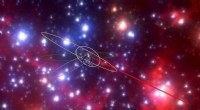
* Gravitational Microlensing: This technique relies on the bending of light around massive objects. If a planet were to pass between a distant star and Earth, its gravity could magnify the star's light, revealing the planet's presence. This technique is more promising for detecting planets far from the Sun, but it could theoretically work closer in as well.
While it is extremely challenging, it is not impossible. As our technology continues to improve, we might be able to overcome these hurdles and discover planets closer to the Sun than Mercury.