* Proximity to the Sun: Mercury is extremely close to the Sun, making it difficult to observe with telescopes from Earth. The Sun's glare washes out the planet, and its intense gravity makes it hard for spacecraft to maintain stable orbits.
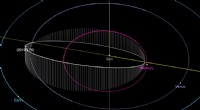
* Short Orbital Period: Mercury zips around the Sun very quickly, only taking 88 Earth days to complete an orbit. This makes it difficult to observe for extended periods, and limits the amount of data that can be collected.
* Extreme Temperature Differences: Mercury experiences incredibly hot days (430°C) and frigid nights (-180°C) due to its lack of an atmosphere. This makes it challenging to design spacecraft that can withstand these extreme temperatures.
* Limited Atmosphere: Mercury has almost no atmosphere, meaning there is no air to slow down incoming meteoroids. This results in a heavily cratered surface, which can be difficult to study for clues about the planet's history.
However, despite these challenges, astronomers have made significant strides in understanding Mercury. Here's how:
* Spacecraft Missions: Missions like Mariner 10 and MESSENGER have provided invaluable data about Mercury's surface, composition, and magnetic field.
* Ground-based Telescopes: Advancements in telescope technology and observation techniques allow astronomers to collect more data about Mercury, even from Earth.
* Computer Simulations: Sophisticated computer models help researchers to understand Mercury's evolution and its interaction with the Sun.
While Mercury remains a challenging object to study, continued research and technological advancements will undoubtedly lead to a deeper understanding of this enigmatic planet.