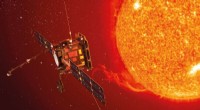
* Nuclear Fusion: The Sun's energy comes from nuclear fusion, primarily converting hydrogen into helium. This process releases tremendous energy but does not produce heavier elements like iron.
* Iron's Role in Supernovae: Iron is a very stable element and cannot be fused further in a star's core. When a massive star runs out of hydrogen and other lighter elements to fuse, its core collapses under its own gravity. This collapse triggers a runaway fusion of silicon into iron, which absorbs energy instead of releasing it. The core then collapses further, leading to a supernova explosion that can create heavier elements.
* Sun's Mass: The Sun is a relatively small star, about 0.1% the mass of a typical supernova-producing star. It simply lacks the gravitational force required to achieve the extreme pressures and temperatures needed to fuse silicon into iron.
Instead of an iron core, the Sun has a core primarily composed of helium and a small amount of heavier elements, including oxygen, carbon, and nitrogen.
In Summary: The Sun is not massive enough to create an iron core through the processes that lead to supernovae. Its core is primarily composed of helium and other lighter elements, resulting from ongoing hydrogen fusion.