1. The Birth of a Star:
* It all began with a giant, swirling cloud of gas and dust called a nebula.
* This cloud was primarily made of hydrogen and helium, with traces of heavier elements.
* Over time, gravity caused the cloud to collapse inward.
* As the cloud collapsed, it spun faster, forming a spinning disk.
* At the center of the disk, the pressure and temperature became so intense that nuclear fusion ignited, giving birth to our Sun.
2. Planet Formation:
* The remaining material in the disk continued to clump together, forming planetesimals – small, rocky bodies.
* These planetesimals collided and stuck together, gradually growing larger.
* Inner planets (Mercury, Venus, Earth, Mars) formed closer to the Sun, where it was too hot for volatile compounds like water and methane to condense.
* Outer planets (Jupiter, Saturn, Uranus, Neptune) formed farther out, where these volatile compounds froze into ice. This ice allowed them to grow much larger.
* Over millions of years, the planetesimals accreted into the planets we see today.
3. The Final Touches:
* The leftover debris from planet formation became asteroids, comets, and other smaller bodies.
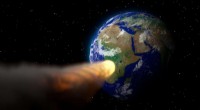
* The planets, in their early stages, were bombarded by asteroids and comets, shaping their surfaces.
* Gravitational interactions between planets and the Sun led to their current orbital arrangements.
Key Players:
* Gravity: The driving force behind the collapse of the nebula and the accretion of planetesimals.
* Nuclear Fusion: The process that powers the Sun and provides its energy.
* Solar Wind: A stream of charged particles from the Sun that pushed lighter elements away from the inner solar system.
It's important to remember that our solar system's formation is a complex process that scientists are still trying to fully understand. This explanation is a simplified overview.