1. Extreme Environments: Both Antarctica and Mars are incredibly harsh environments, characterized by:
* Extreme Cold: Both locations have sub-zero temperatures for most of the year, with average temperatures in Antarctica reaching -57°C (-71°F) and Mars averaging -62°C (-79°F).
* Low Atmospheric Pressure: The atmospheric pressure on Mars is about 100 times lower than Earth's, while Antarctica's is also significantly lower than at sea level.
* Limited Resources: Access to water, food, and other resources is scarce in both locations, forcing scientists to rely on self-sufficiency.
* Isolation and Distance: Both are remote and isolated, requiring extensive logistics and planning for any expeditions.
2. Scientific Research: Scientists studying Antarctica have developed technologies and techniques that are directly applicable to Mars exploration:
* Robotics and Automation: Robotic exploration and remote control are crucial in both environments. Research stations in Antarctica rely on automated systems, and scientists are developing similar technologies for Martian rovers.
* Life Detection Techniques: Antarctica provides a natural laboratory for studying extremophiles, organisms that thrive in extreme environments. This research could help us understand the potential for life on Mars.
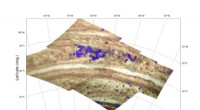
* Geological and Climate Studies: Antarctica's ice sheets and glaciers are analogous to Mars' polar ice caps. Studying their formations and dynamics can provide insights into Mars' past climate and geology.
* Resource Extraction and Utilization: Antarctic research stations are experimenting with technologies for extracting and utilizing resources like water and solar energy, which are crucial for future Martian settlements.
* Psychological and Medical Research: Living in Antarctica's extreme conditions provides a unique opportunity to study human psychology and physiology in isolation and under stress. This research is valuable for preparing future Mars astronauts.
3. Analog Missions: Antarctica is used as a real-life analogue environment for simulating Mars missions. Teams of researchers live and work in Antarctic stations for extended periods, testing technologies, and experimenting with procedures for long-duration space missions.
In Conclusion:
Antarctica serves as a valuable testbed for developing technologies, researching scientific questions, and conducting simulations relevant to the exploration of Mars. By studying this icy continent, we gain valuable knowledge and experience that will be vital for venturing to the Red Planet.