Here's a breakdown of the theory:
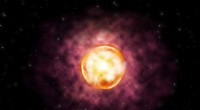
* Formation of the Sun: The solar nebula began collapsing under its own gravity, forming the Sun at its center.
* Planetesimal Formation: As the nebula collapsed, particles within it collided and clumped together, forming larger and larger objects called planetesimals.
* Protoplanetary Disk: The remaining material in the nebula formed a disk around the Sun, with planetesimals orbiting within it.
* Asteroid Belt Formation: In the region between Mars and Jupiter, planetesimals didn't coalesce into a single planet. Instead, their gravitational interactions kept them from merging, leading to the formation of the asteroid belt.
Why the asteroid belt formed in this particular location:
* Jupiter's Gravity: Jupiter, the largest planet in our solar system, has a strong gravitational pull. This pull disrupted the formation of a single planet in the region between Mars and Jupiter, scattering planetesimals and preventing them from coalescing.
Important to note:
* The asteroid belt isn't a perfectly empty space; there are still significant gaps and clusters within it.
* The asteroids we see today are the remnants of the early solar system, providing valuable clues about its composition and evolution.
* Scientists are still studying asteroids to learn more about their origins and the formation of the solar system.