Here's why:
* Weak gravity: Mercury's small size and weak gravity make it difficult to hold onto an atmosphere.
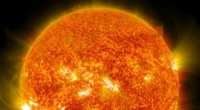
* Solar wind: The constant bombardment of charged particles from the Sun (solar wind) can strip away any atmosphere that might form.
* Lack of a magnetic field: Mercury's magnetic field is very weak, offering little protection from the solar wind.
This means that Mercury's exosphere is:
* Extremely thin: It's about a trillion times thinner than Earth's atmosphere.
* Highly variable: The exosphere's density changes depending on the amount of solar radiation and other factors.
* Mostly composed of: Sodium, potassium, hydrogen, helium, oxygen, and calcium.
While not technically an atmosphere, Mercury's exosphere does play a role in some interesting phenomena:
* Sodium tail: Sunlight can excite the sodium atoms in the exosphere, creating a glowing "tail" that extends millions of kilometers away from Mercury.
* Impact-induced atmosphere: When objects hit Mercury's surface, they can briefly release a cloud of gas that adds to the exosphere.
So, while it's not quite like the atmosphere we're familiar with on Earth, Mercury's exosphere is still an interesting and important part of its environment.