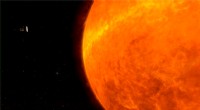
1. Size and Density: Both planets are considered terrestrial planets, meaning they are primarily composed of rock and metal. Venus is slightly smaller than Earth, but their densities are very close.
2. Composition: Both planets have a similar core composition, with an iron-nickel core surrounded by a rocky mantle.
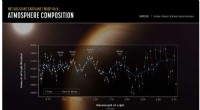
3. Atmospheric Composition: While vastly different in density and temperature, both planets have atmospheres dominated by carbon dioxide. However, Earth's atmosphere also contains significant amounts of nitrogen and oxygen, unlike Venus.
4. Rotation Period: Both Earth and Venus rotate slowly, with Venus having a very slow retrograde rotation (rotating backwards compared to Earth).
5. Formation: Both planets formed in the same region of the solar system, within the frost line, where water could remain solid. This explains their similar rocky composition.
However, it's important to note that these similarities are outweighed by the dramatic differences between the two planets, particularly in their atmospheric pressure, surface temperatures, and habitability.