* Orbital Period is Determined by Distance, Not Mass: The time it takes an object to orbit another (its orbital period) is primarily determined by the distance between the two objects. The further away Callisto is from Jupiter, the longer its orbital path and the slower its speed.
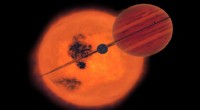
* Gravitational Influence: While mass does play a role in gravity, it's not the dominant factor in determining orbital periods. The primary influence is the gravitational pull of the central body (Jupiter in this case) and the distance of the orbiting object (Callisto).
* Callisto's Distance: Callisto orbits Jupiter at a distance of roughly 1.88 million kilometers, making it the furthest of Jupiter's four largest moons. Ganymede, on the other hand, orbits at a distance of about 1.07 million kilometers.
* Kepler's Laws: Kepler's Third Law of Planetary Motion states that the square of the orbital period of a planet is proportional to the cube of the semi-major axis of its orbit. This means the further away a planet or moon is, the longer its orbital period.
In summary: Callisto's greater distance from Jupiter, not its smaller mass, is the primary reason it takes longer to complete an orbit.